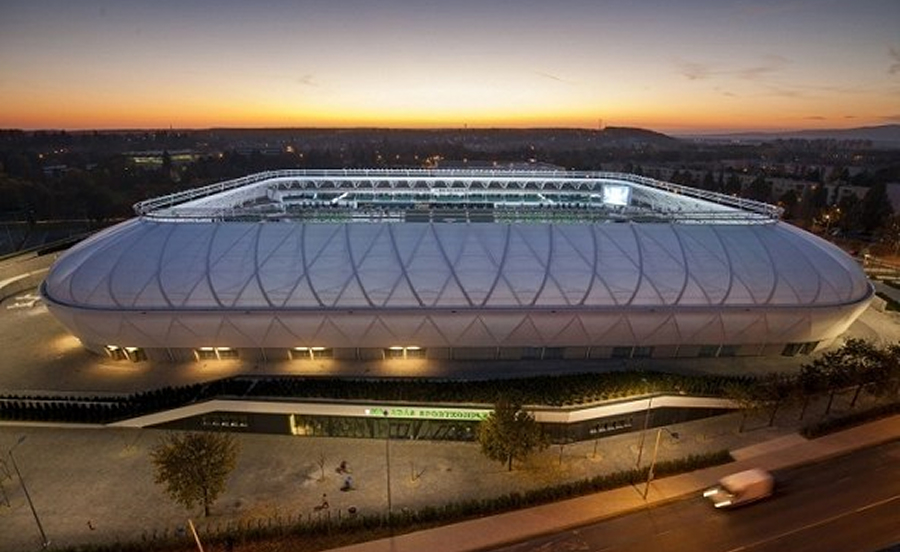
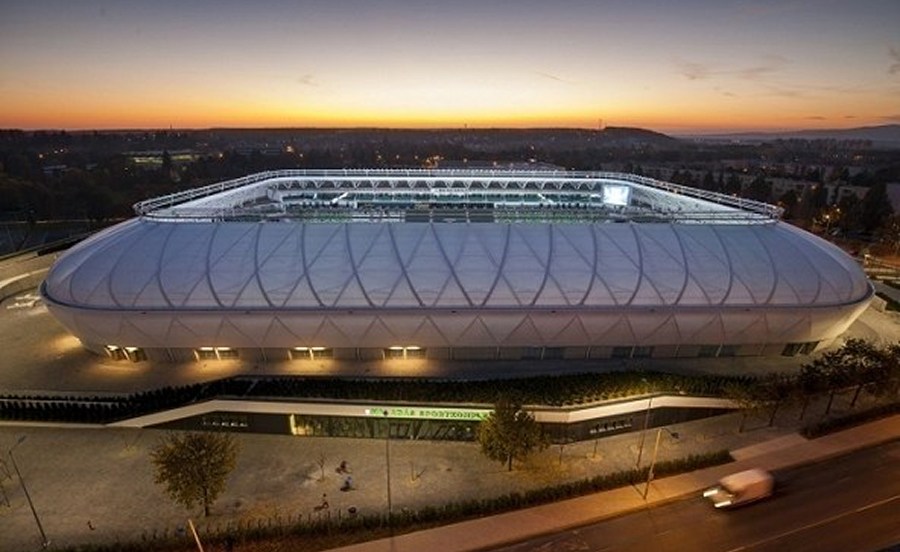
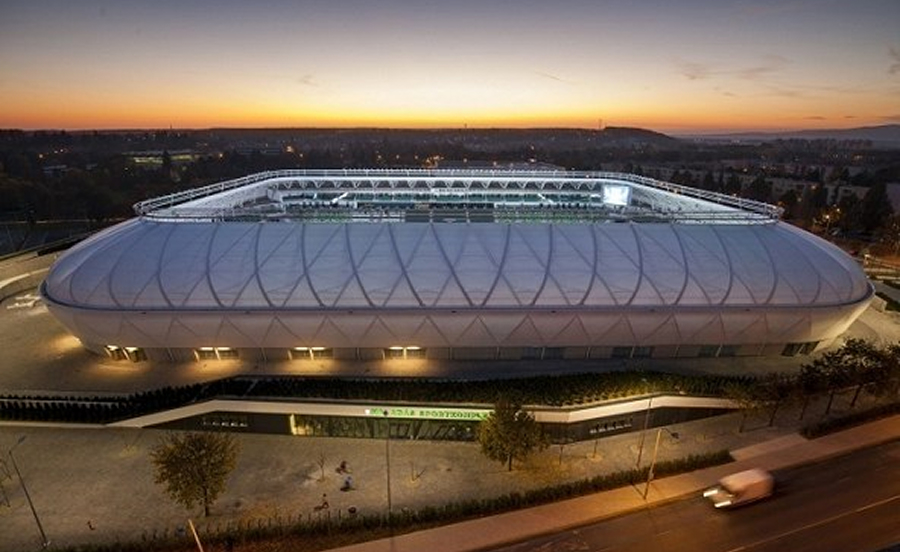
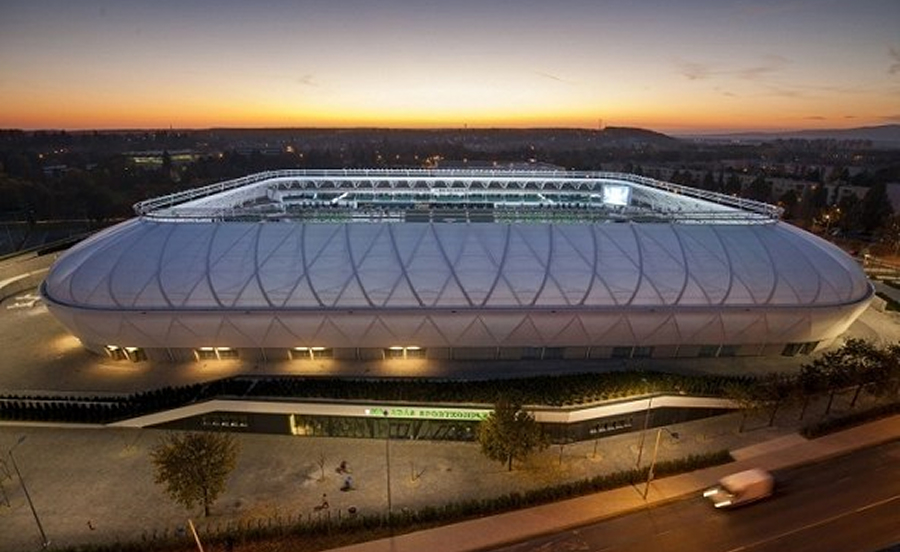
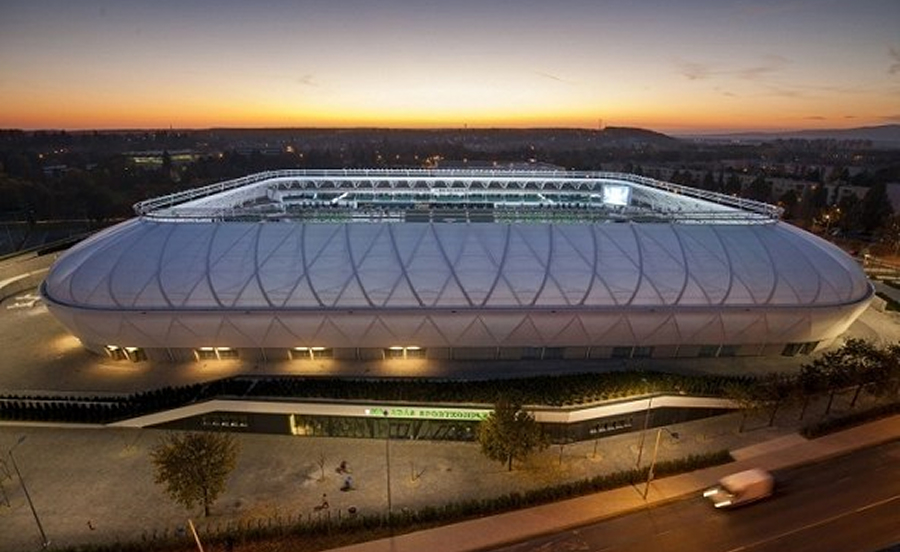
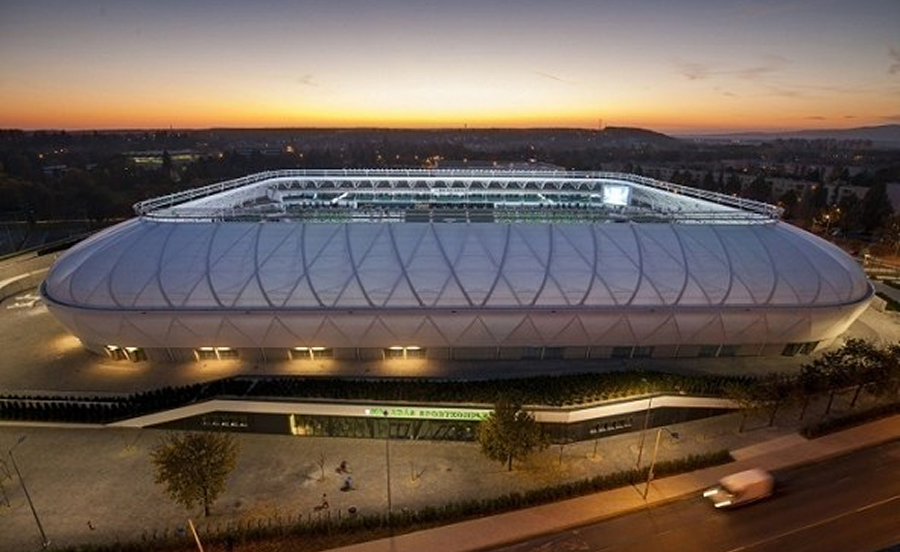
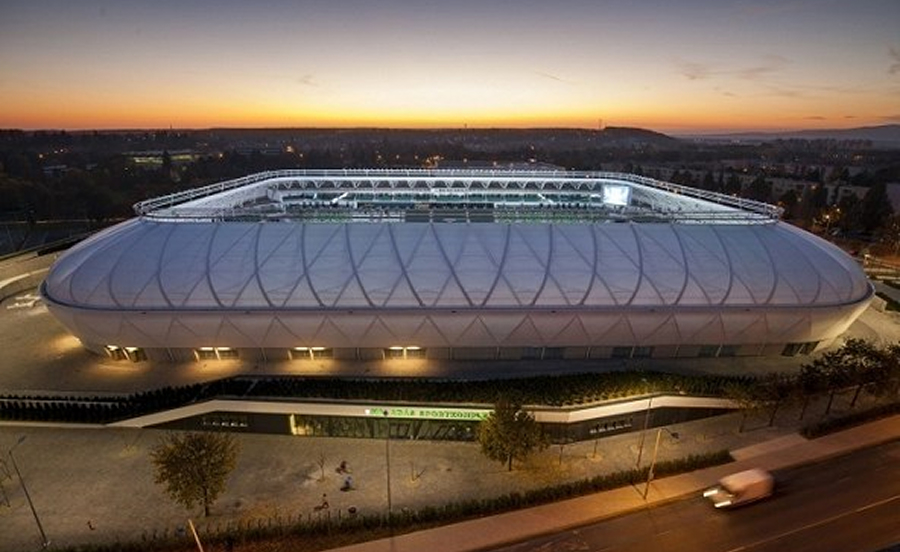
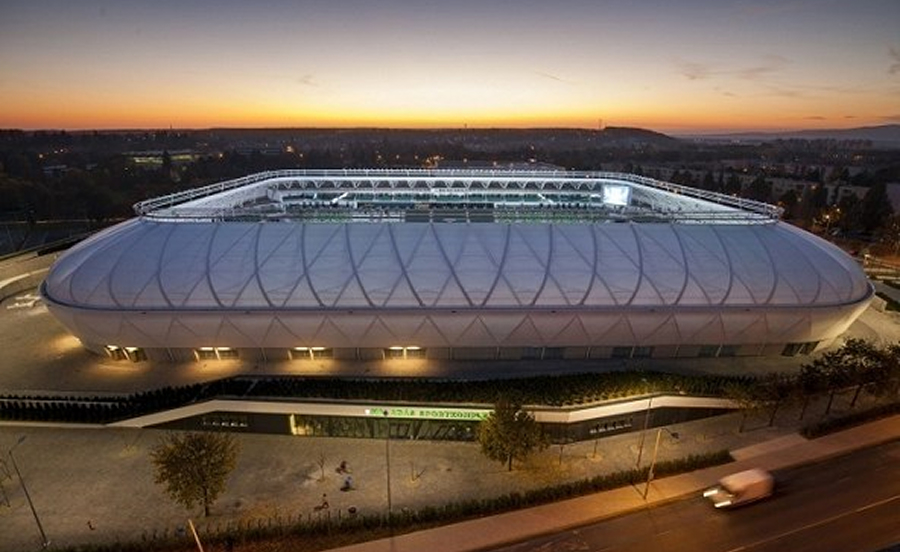
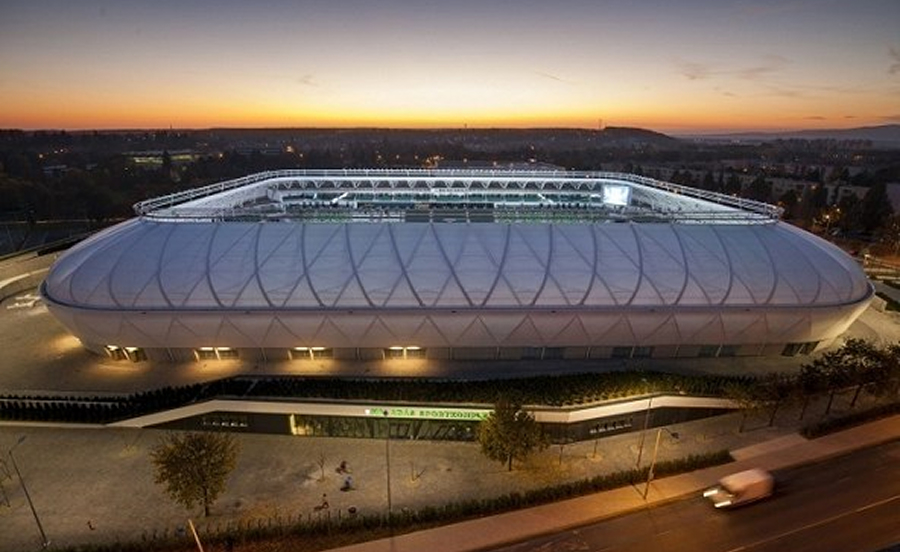
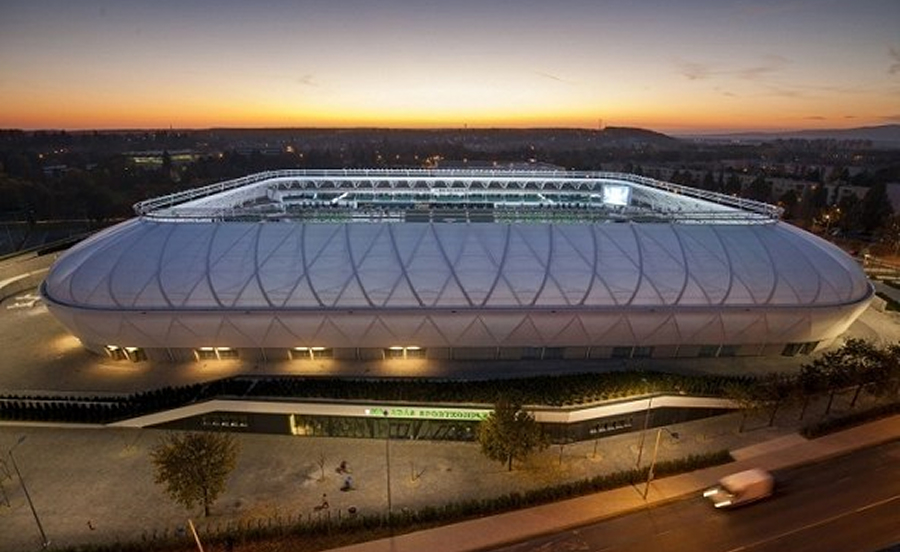
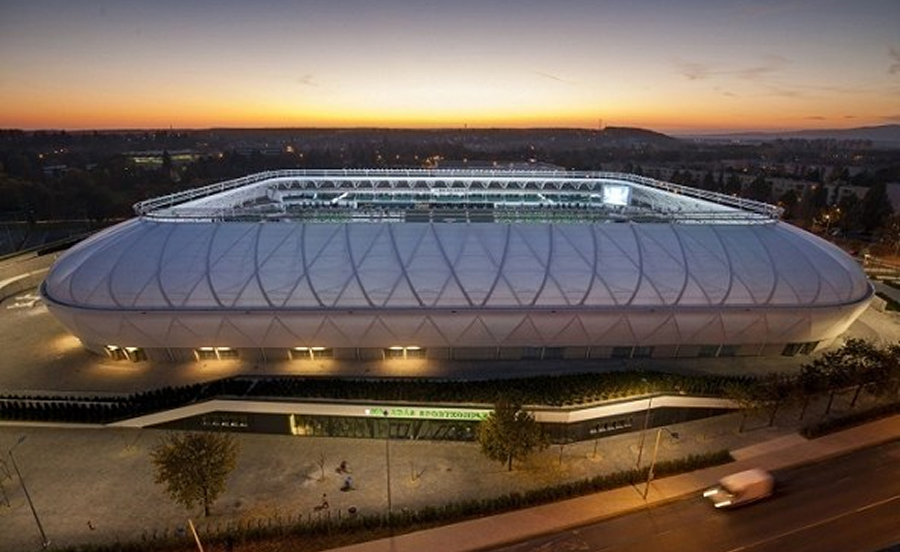
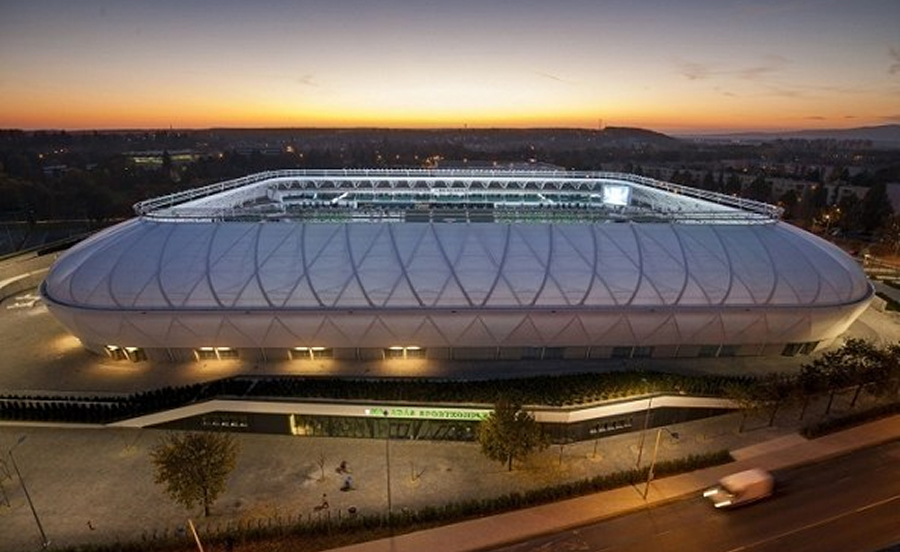
“Nagyerdei Stadium” Debrecen
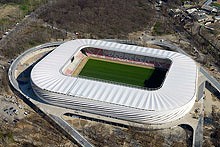
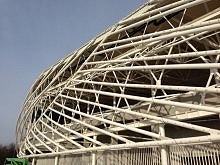
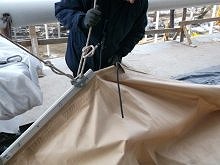
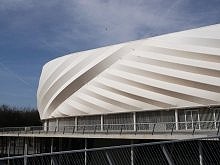
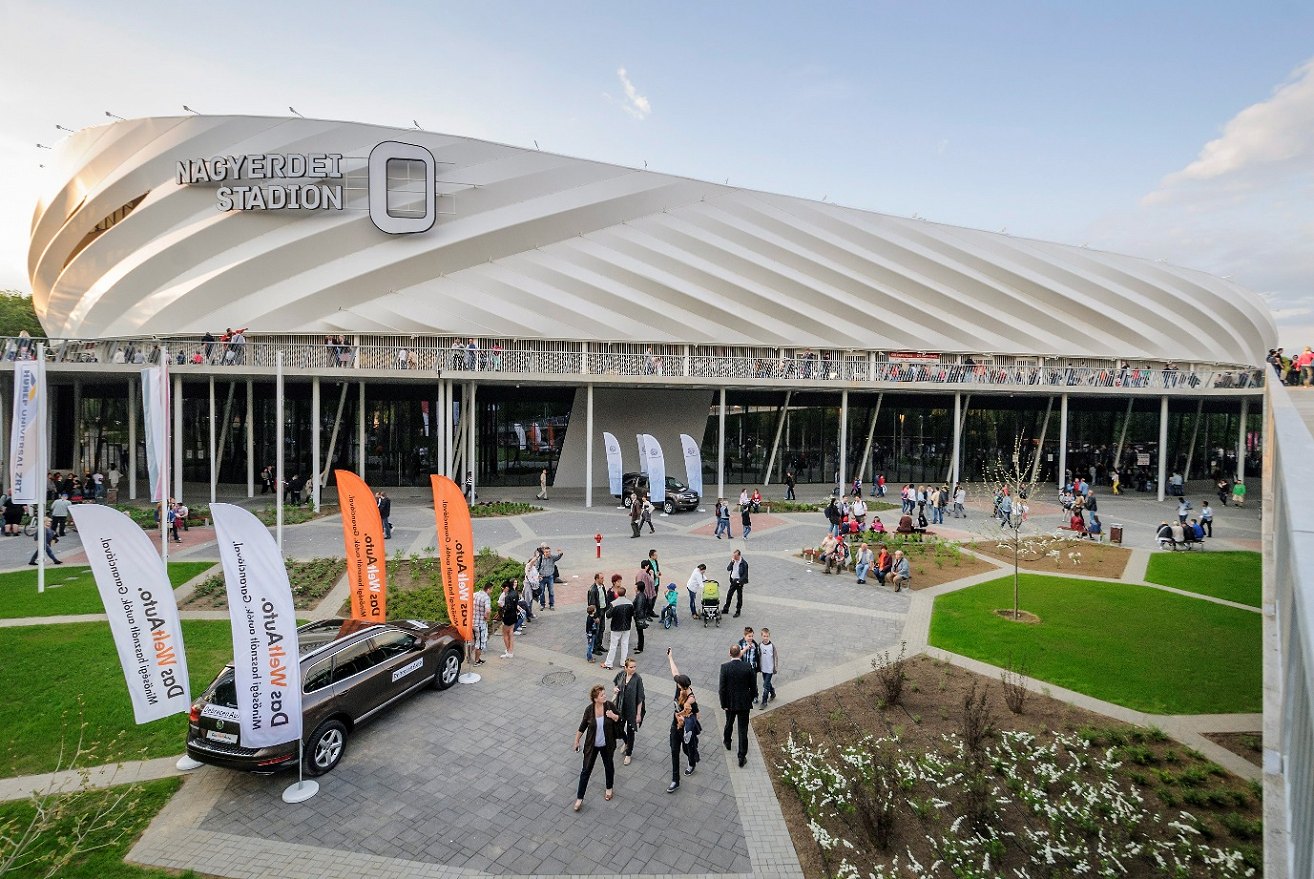
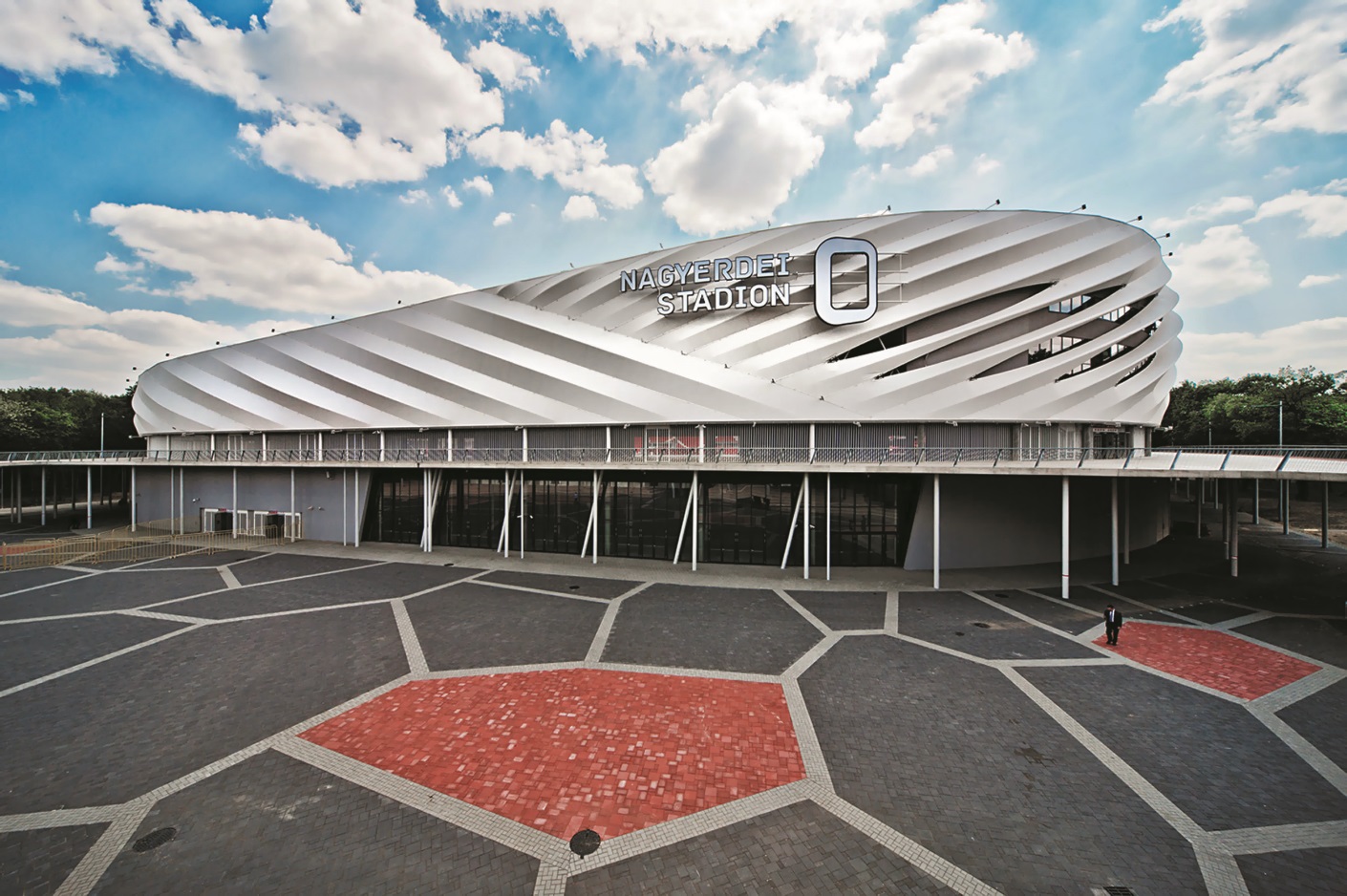
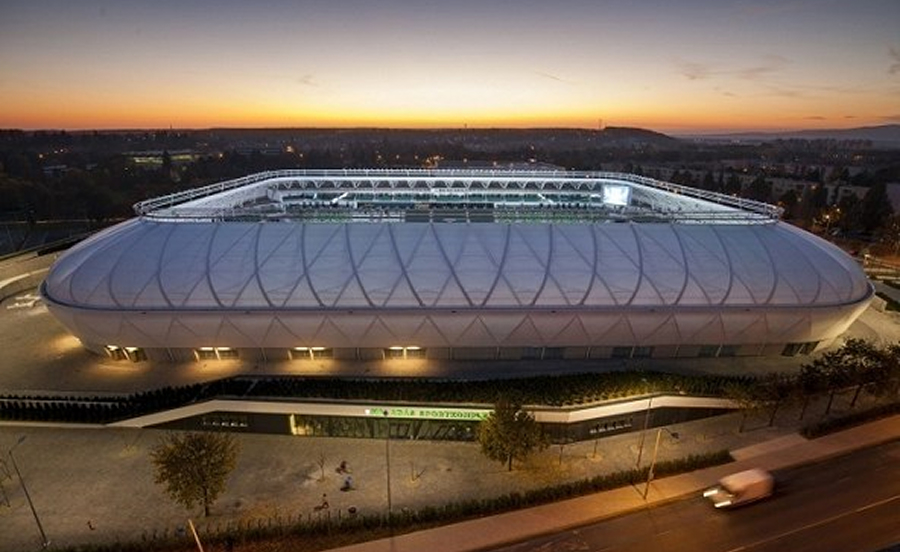
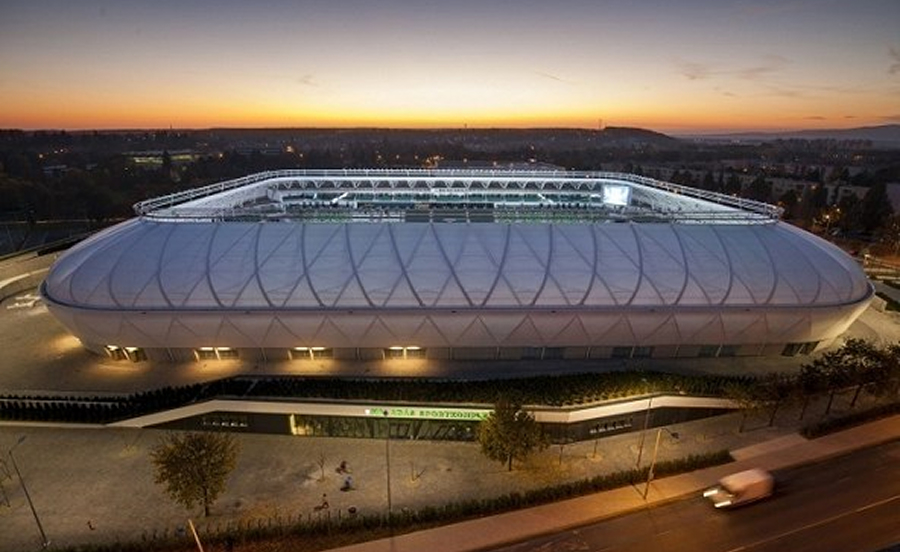
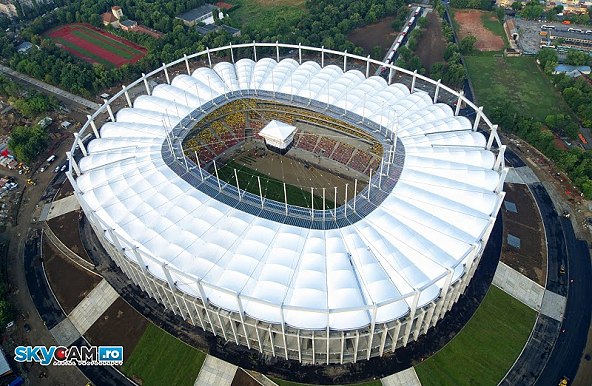
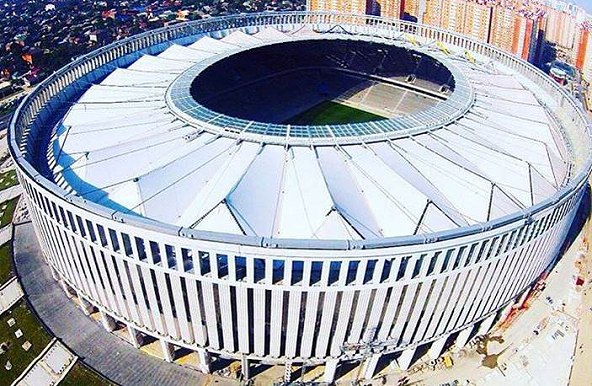
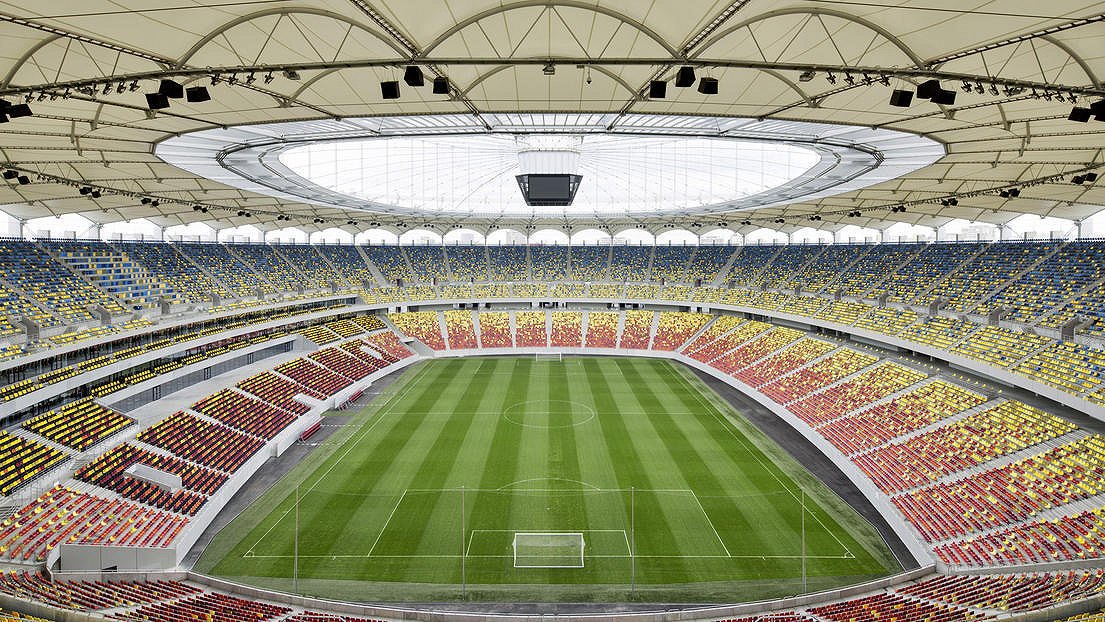
At the Nagyerdei (“Loki”) Stadium in Debrecen, the primary function of the roof structure is to provide shade, while the facade cladding is intended not only to provide coverage but also to enhance the building’s aesthetic appeal. At the Debrecen stadium, individual sections of both the roof structure and the facade were manufactured in different sizes; therefore, the membrane elements for nearly every section—along with their corresponding fastenings (connections to the steel frame)—had to be designed individually. The membrane packages and membrane fasteners were hoisted onto the roof using a winch. To pull the membrane edges against the steel structure and then secure the membrane in the designed position, we used special aluminum profiles and steel clamps. Tensioning was performed step by step using manual force and ratchet tensioners.
The installation technology itself combines industrial installation work with industrial mountaineering techniques, as in addition to a high level of material expertise, the specialists must also be capable of working at heights, since the installation areas are generally inaccessible by either crane or aerial work platform.
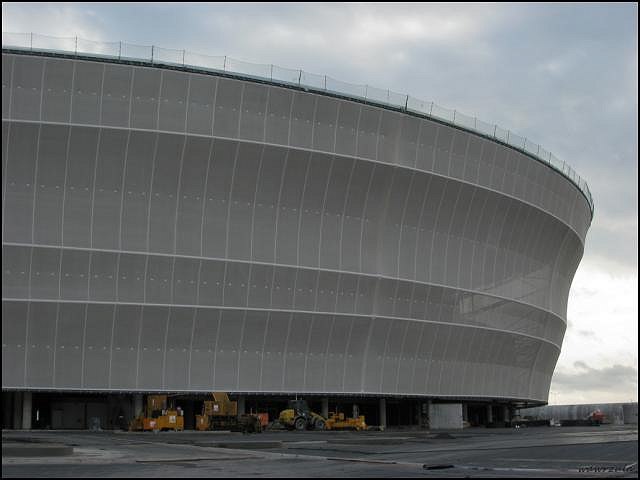
The installation of the facade membranes differed completely from conventional glass-fiber installation technology, as the fastening of individual facade membrane sections to membrane-oriented supports, as well as the opening formed in the center of the sections on the west side, significantly influenced the design and installation considerations. The connection of the upper and lower edges of the elements—some of which were 40 meters long—as well as the installation and adjustment of the wire ropes used to form and reinforce the central opening, had to be carried out simultaneously to create a properly taut facade cladding.
| Project Name: | “Nagyerdei Stadium,” Debrecen |
| Year of Construction: | 2013-14 |
| Graboplan’s scope of work: | Manufacture and on-site installation of PTFE roof (18,012 m²) and PTFE facade (7,433 m²) membranes |
| Construction period: | August 2014–January 2015: manufacturing May 2015–December 2015: on-site installation |